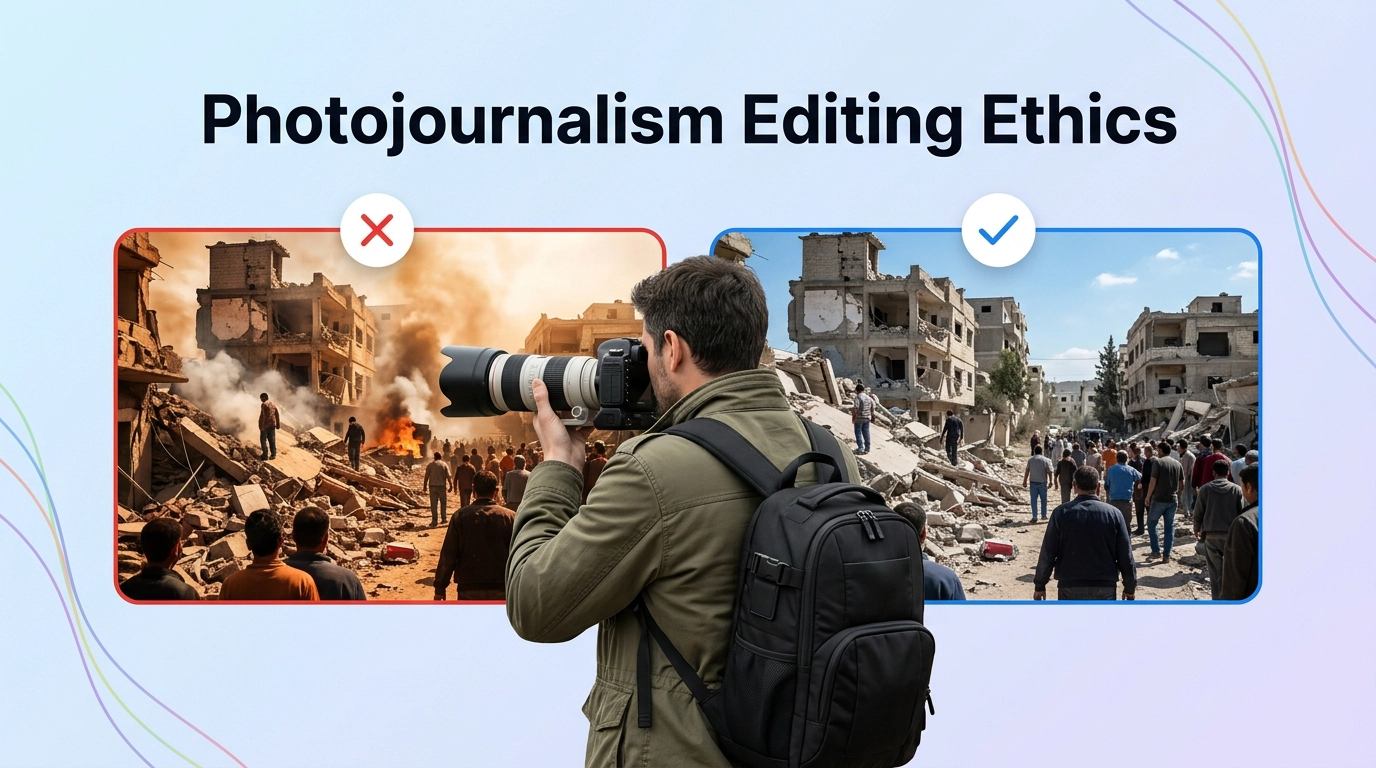
Photojournalism Editing is the process of correcting exposure, color balance, and overall clarity in news and documentary photographs. Without changing anything about what actually happened in the frame. It’s a narrower, stricter version of photo editing than most people realize. A wedding photographer can soften skin or blend two exposures together with no one blinking an eye. But a photojournalist working the same tools on a news image risks crossing an ethical line the moment a correction starts changing.
The meaning of the scene rather than just its readability. Brightening a dark frame, fixing a bad color cast, or cropping out a distracting edge are all considered fair game. Removing an object, combining two moments into one, or reshaping how a subject appears is not. That distinction, improving clarity while leaving the truth of the moment untouched is really what photojournalism editing comes down to in practice.
What Is Photojournalism Editing?
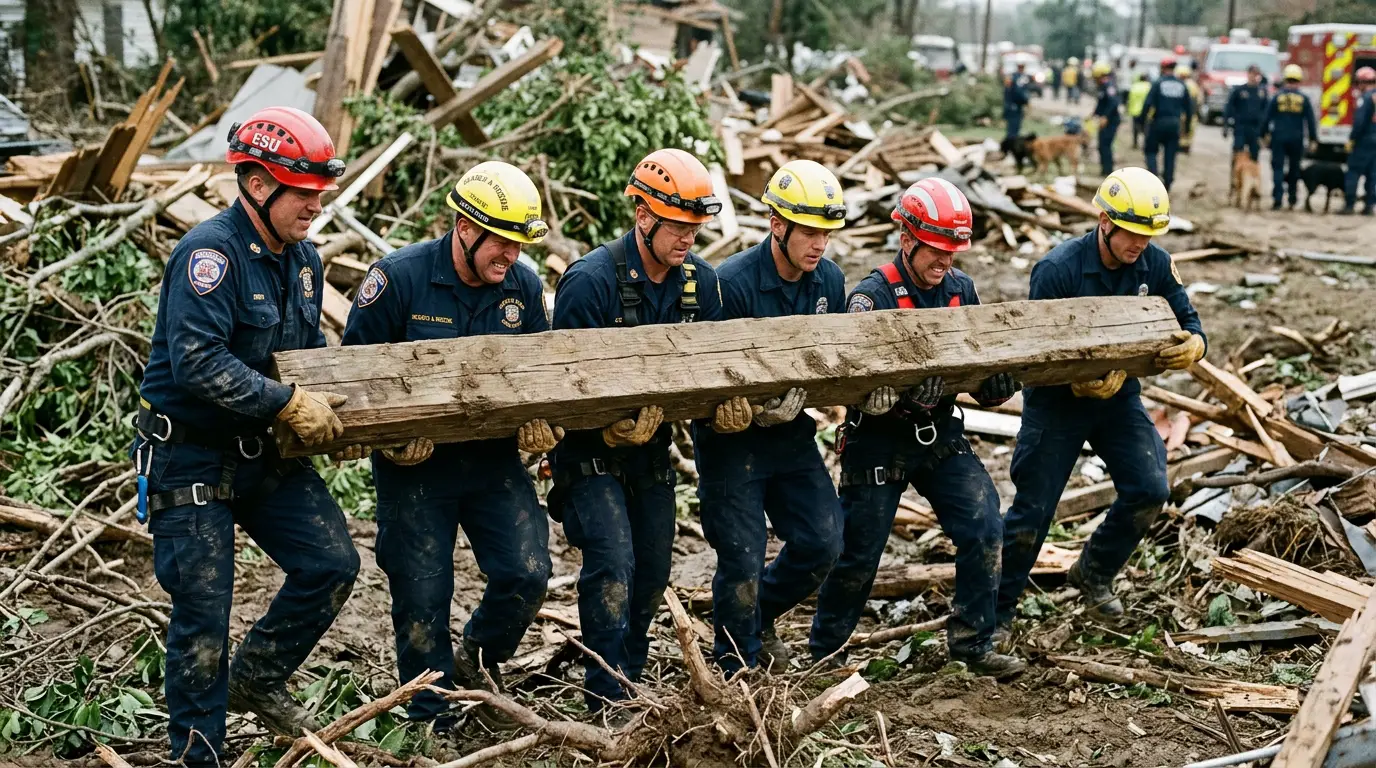
Photojournalism editing is the process of preparing documentary, editorial, and news photographs for publication. In plain terms, it’s the technical work that happens between the moment a photographer presses the shutter and the moment that image appears in front of readers.
The purpose of this kind of editing is narrow and specific: improve the readability and technical quality of the photograph. That might mean correcting an exposure that’s too dark to make out details, fixing a color cast caused by artificial lighting, or cropping out a distracting edge of the frame. What it should never do is change the factual content of the original scene. The people, objects, and events captured in the image need to remain exactly as they were when the photograph was taken.
This is the defining feature of photojournalism editing compared to almost every other type of image editing. The goal isn’t to make the photograph look better in a subjective sense. It’s to make the truth of the photograph easier to see.
Common Photojournalism Editing Adjustments
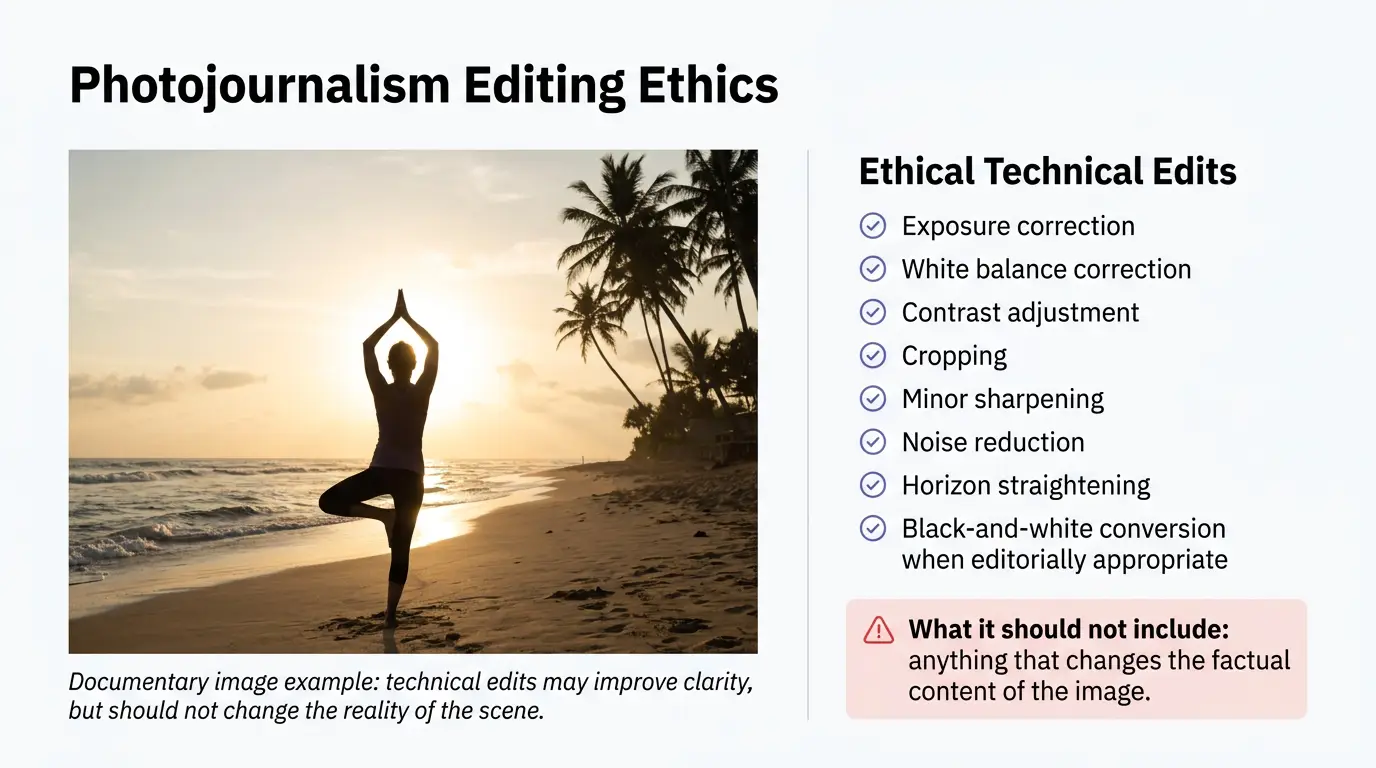
A handful of technical adjustments are widely accepted across newsrooms and documentary publications because they correct for the limitations of cameras and shooting conditions, rather than altering the substance of the image. These typically include:
Exposure correction: Cameras don’t always capture a scene the way the human eye perceived it. Adjusting exposure brings the image closer to how the moment actually looked.
White balance correction: Artificial lighting, mixed light sources, or unusual color temperatures can shift the colors in a photograph away from reality. Correcting white balance restores a more natural, accurate look.
Contrast adjustment: Subtle contrast tweaks can make a photograph easier to read, especially when the original file looks flat or hazy.
Cropping: Removing empty space or tightening a composition can help an image communicate its subject more clearly, as long as no meaningful context is lost.
Minor sharpening: A light sharpening pass can help fine details stand out, particularly for images that will be printed or viewed at a large size.
Noise reduction: Photographs taken in low light often carry visible grain or noise. Reducing this cleans up the technical quality without altering the content.
Horizon straightening: A tilted horizon line is a technical flaw, not a storytelling choice, so straightening it is generally considered acceptable.
Black-and-white conversion when editorially appropriate: In certain editorial contexts, converting a color image to black and white is an accepted stylistic and publication choice, though it does remove color information from the record.
These adjustments share one thing in common: they correct for technical shortcomings in how the image was captured, rather than reshaping the story the image tells.
Why Photojournalism Editing Is Different From Photo Retouching
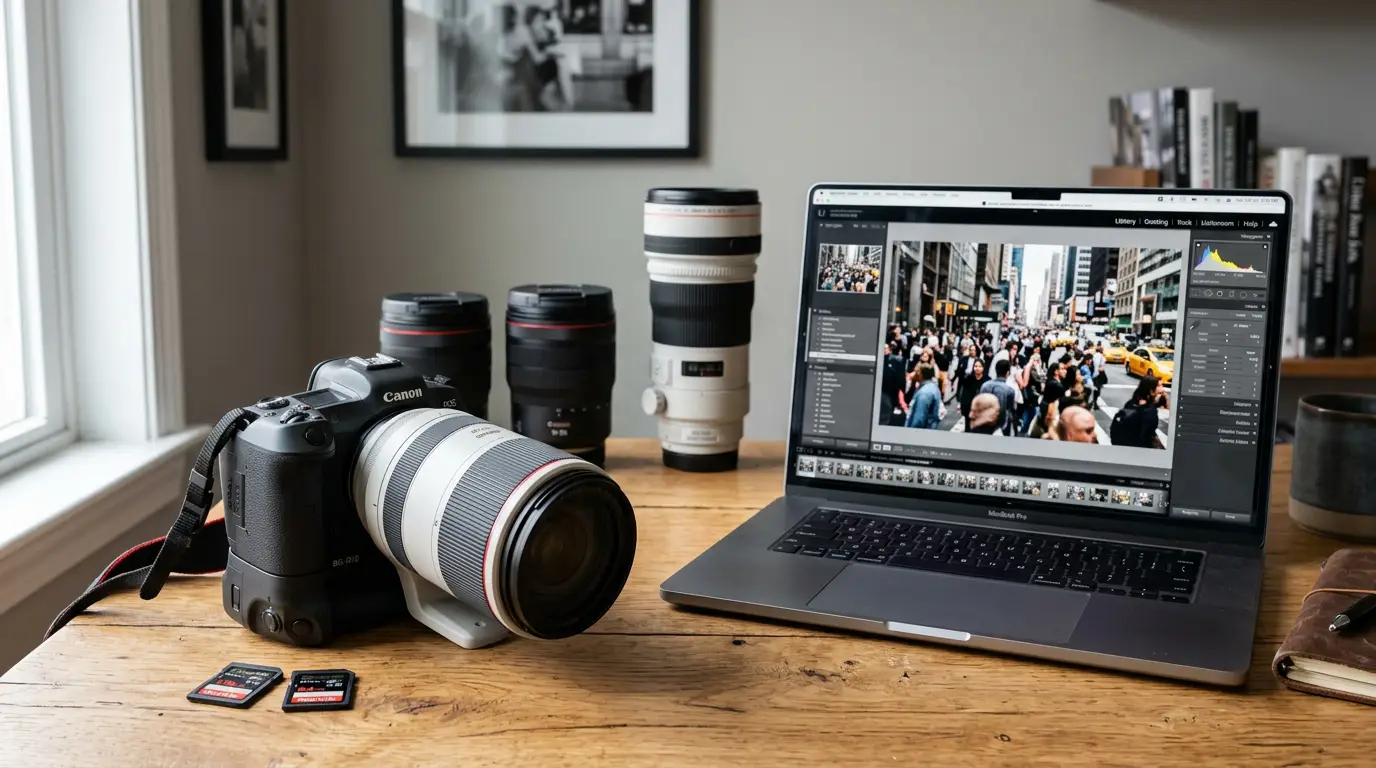
It helps to put photojournalism editing side by side with commercial photo retouching, because the differences make the ethical boundary much easier to understand.
Photojournalism editing is built around four priorities: accuracy, clarity, context, and preserving the original event. Every decision an editor makes should serve one of these goals. If an adjustment doesn’t make the image clearer or more accurate, it probably doesn’t belong in a documentary photograph.
Commercial photo retouching operates under an entirely different set of priorities: visual enhancement, removing distractions, improving appearance, and creating a polished final presentation. In commercial work, the photograph is often a piece of persuasive or promotional material. Making it look as attractive as possible is the point, not a side effect.
A Simple Example
Consider a distracting object in the background of a photograph. A stray trash can, a cable running across the floor, or an out-of-place sign.
In a commercial image, removing that object is usually acceptable. Nobody expects a product photo or an advertising image to represent an unedited scene. The photograph is a constructed piece of visual communication, and cleaning it up serves the purpose it was made for.
In a news image, removing an object or a person from the frame is a very different act. Doing so can change the viewer’s understanding of the event. Maybe that trash can indicates the aftermath of a protest. Maybe that extra person in the background reveals how crowded or empty a space really was. Removing it doesn’t just tidy up the photograph. It edits the historical record of what happened.
This is why an edit that looks completely harmless in commercial photography can become a serious ethical problem in journalism. The same technical action of removing an element from a frame carries a different weight depending on what kind of photograph it appears in.
What You Can Edit in Photojournalism
With the core distinction in mind, it’s worth walking through the specific technical corrections that are generally considered acceptable in photojournalism, and why they don’t compromise the accuracy of the image.
The common thread running through this section is simple: these corrections can improve an image without changing its factual meaning. They deal with how the photograph is presented, not what it shows.
Exposure and Contrast
Cameras frequently struggle with difficult lighting, especially in fast-moving news situations where there’s no time to set up ideal conditions. A photographer covering a nighttime event, an indoor press conference, or a scene with strong backlighting may come away with frames that are too dark or too bright to read clearly.
Adjusting exposure in post-processing helps correct for this. Shadows can be lifted slightly so that details aren’t lost in darkness, and highlights can be brought down so they don’t blow out into featureless white. The goal is simply to reveal what was already there in the scene, not to invent new detail.
Contrast needs a lighter touch. A small boost in contrast can make a hazy or flat-looking image easier to read. But pushing contrast too far can change the mood of a photograph. Deep shadows and stark highlights can make a scene feel more dramatic or ominous than it actually was, which starts to cross from technical correction into emotional framing.
White Balance
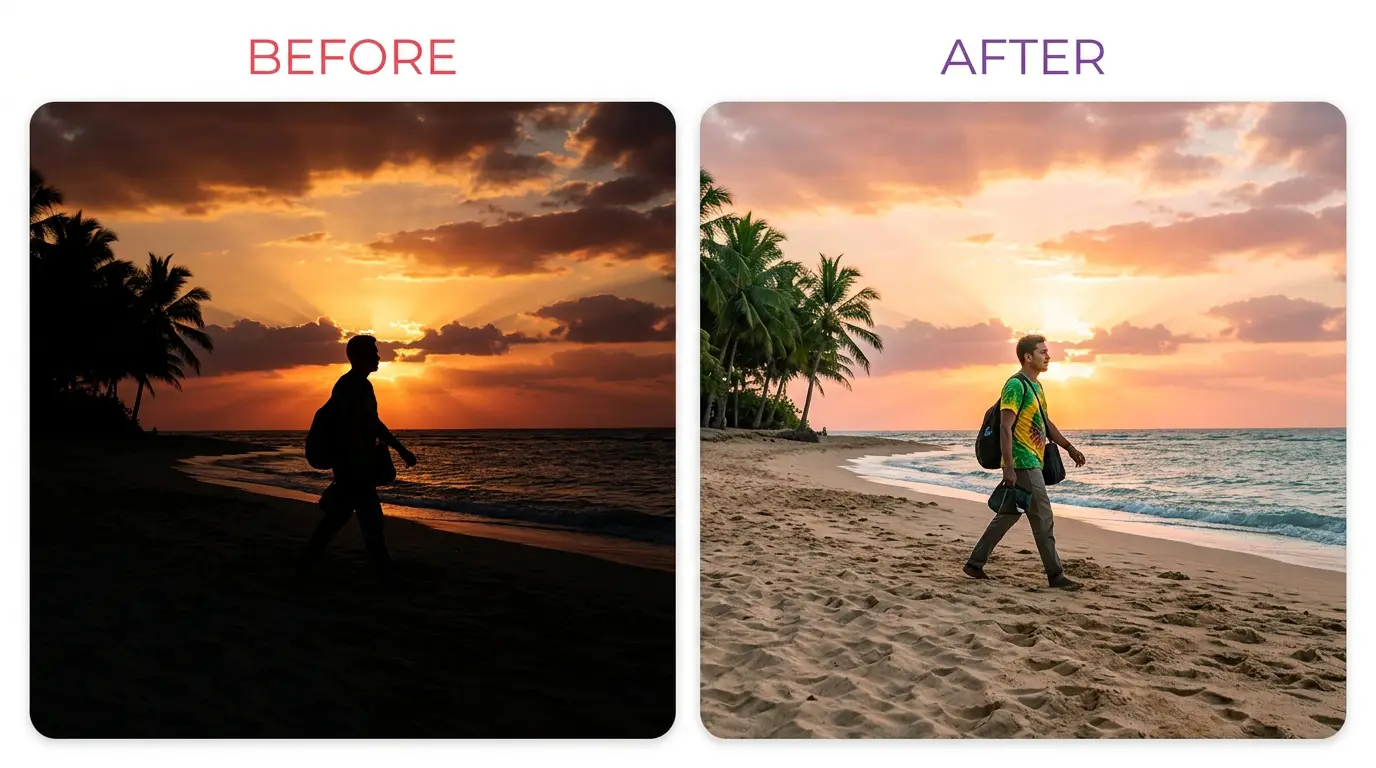
Lighting conditions in the real world are rarely uniform. A scene lit by a mix of daylight, fluorescent bulbs. And phone screens will often produce a photograph with an unnatural color cast a greenish tint, an overly warm orange glow, or unnaturally blue shadows.
White balance correction addresses this directly. By adjusting the color temperature, an editor can restore more natural-looking colors that better match what the human eye actually perceived at the scene. This is considered one of the safest and most routine corrections in photojournalism.
The caution here is to avoid adjustments that dramatically change the emotional tone of the image. Cooling an image down to make it feel colder and more somber. Or warming it up to make a scene feel more inviting, moves the correction from technical accuracy into interpretation even if the color shift is subtle.
Cropping
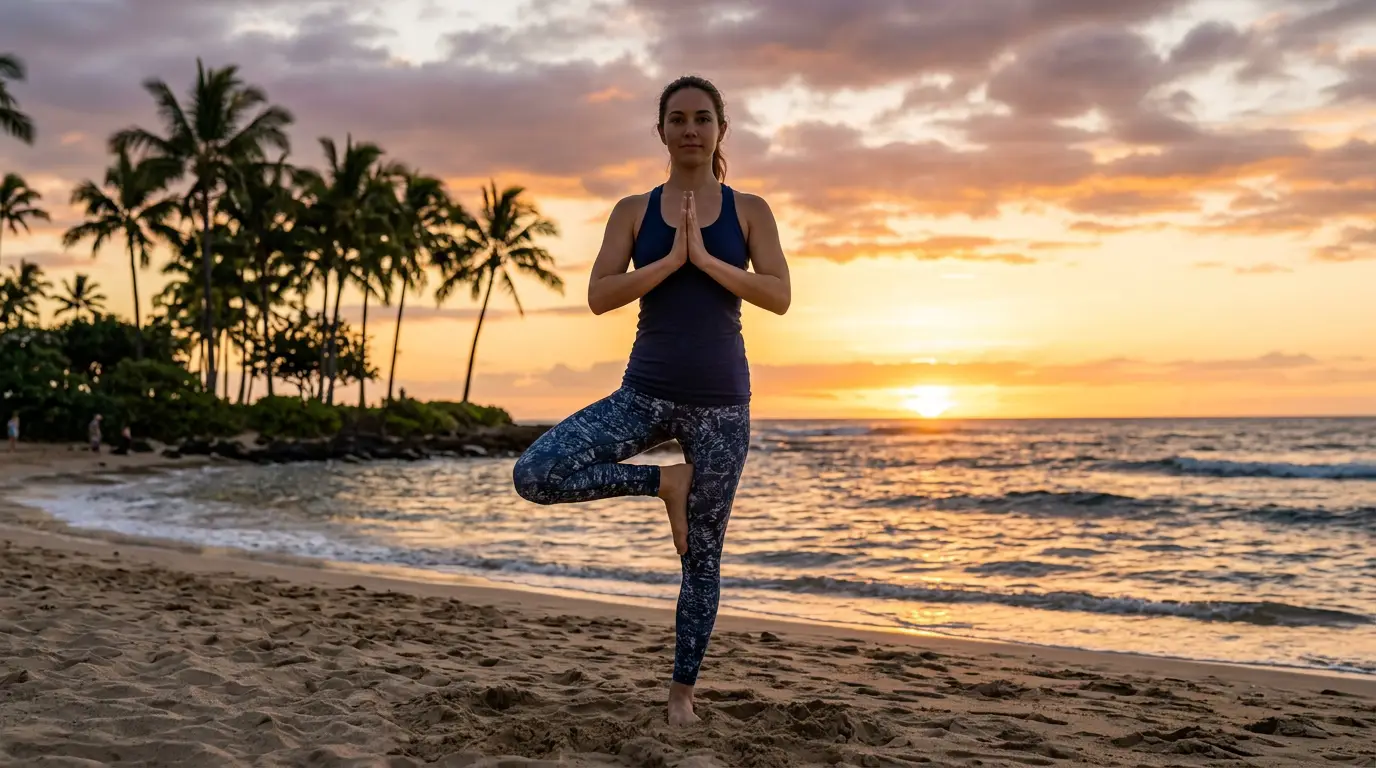
Cropping is one of the most useful tools available to a photo editor, and also one of the most sensitive.
Used well, cropping can improve composition by tightening the frame around the most important part of the scene. It can remove unnecessary empty space that adds nothing to the story. It can also help an image fit the dimensions required by a particular publication layout, whether that’s a wide banner image or a narrow vertical crop for mobile.
But cropping carries real risk in photojournalism, because removing important context can change the meaning of an image. If a wider shot shows a small, contained protest, but a tight crop makes it look like a massive crowd, the crop has misrepresented the event. If cropping removes a second person standing next to the main subject. Someone who was reacting, intervening, or simply present. The story the photograph tells can shift substantially.
A useful way to think about it: there’s a meaningful difference between an original photograph, an acceptable crop that tightens the composition without losing context, and a problematic crop that removes information the viewer needs to understand the scene accurately. Editors should always ask whether a crop is clarifying the subject or quietly rewriting what the photograph represents.
Sharpening and Noise Reduction

Digital noise and softness are common technical issues, especially with low-light photography or images captured on smaller camera sensors. Minor sharpening can improve readability by making edges and fine details more distinct, which matters for both print and digital reproduction. Noise reduction can clean up the grainy, speckled appearance that low-light images often have.
Both tools need to be used carefully. Excessive sharpening or noise reduction can remove important detail, smoothing out fine textures that were part of the original scene. Or making the photograph look artificially processed and stylized. When a photograph starts to look like a painting or an illustration rather than a photograph, the processing has gone too far.
What You Should Not Edit in Photojournalism
If the previous section covered the “can,” this section covers the “should not” and it’s arguably the more important half of this entire discussion.
The clearest way to frame this is with a single guiding principle: if an edit changes the factual content of an image, removes meaningful context, or changes how viewers understand what happened, it should not be used. Everything else in this section is really just an extension of that one idea.
Do Not Add or Remove elements
This is the most fundamental rule in photojournalism editing. Journalists should not add or remove meaningful elements from a photograph. This includes people, objects, signs, smoke, wires, or any other visually important detail that was present in the original scene.
It doesn’t matter whether removing that element would make the photograph look cleaner or more visually appealing. The issue is not whether the photograph looks better after the edit. The issue is whether it remains truthful. A photograph with a slightly awkward composition is still an honest representation of reality. A photograph with a digitally erased protester, a removed weapon, or an added plume of smoke is not, no matter how convincing the final image looks.
This standard exists because documentary photography is treated as evidence, not illustration. Once viewers can no longer trust that a news photograph represents an unaltered moment in time, the entire value of photojournalism as a form of record-keeping breaks down.
Do Not After a Person’s Appearance
Appearance-focused retouching, the kind that’s completely normal in fashion, portrait, and commercial photography. Generally has no place in documentary images. This includes things like:
- Skin smoothing
- Facial alteration
- Body reshaping
- Removing visible marks
- Removing meaningful physical details
These kinds of edits might seem harmless individually, especially something as small as smoothing out a blemish. But this type of retouching can affect how the person in the photograph is represented. A wound, a scar, a sign of exhaustion, or a visible physical detail might be an essential part of the story the image is telling. Editing it away even subtly changes how the viewer perceives that person and their circumstances.
This is one reason documentary and editorial portraiture is often held to a “minimal correction” standard rather than a “retouching” standard: basic technical cleanup is fine. But reshaping how a real person actually looked is not.
Do Not over-Crop Away Important Context
This point extends the earlier discussion of cropping, but it deserves its own emphasis because it’s one of the easiest ethical lines to cross without realizing it.
Context matters enormously in photojournalism. A person standing beside the main subject might be relevant to the story. A protest sign in the background might explain what the demonstration is actually about. Someone holding a child in the frame might change how a viewer interprets the danger or emotion of a scene. Other objects in the surrounding environment. A damaged building, an empty shelf, a police vehicle, might carry information that’s essential to understanding what happened.
Removing this kind of context through cropping doesn’t just tighten a composition; it can alter the viewer’s understanding of the entire event. A responsible editor treats every crop as a decision about what information the audience is allowed to see, not merely as a compositional choice.
Do Not Push the Image Into a Stylized Look
Finally, photojournalism editing should avoid pushing an image toward a heavily stylized aesthetic. This includes excessive color grading, heavy vignettes, aggressive dodging and burning, or dramatic black-and-white effects.
These techniques are common in fine art and commercial photography because the goal there is often mood and visual impact. But applied to a documentary image, they move the photograph away from documentation and toward artistic interpretation. A dramatically vignette image draws the eye toward a particular part of the frame in a way the original scene did not. Heavy color grading can shift how “cold,” “warm,” “harsh,” or “gentle” a scene feels. Even though nothing about the actual event has changed. The photograph stops being a record and starts being a mood piece.
Where the Line Usually Gets Blurry
Everything discussed so far covers the clearer cases. In practice, though, many of the most difficult editing decisions in photojournalism are not obvious at all.
Consider a few examples:
A stronger crop may isolate a subject in a way that feels more powerful. But is it still representing the scene honestly, or has it removed something the viewer needed to see?
Darkening an image slightly may make an event feel more serious or somber. That might match the tone of the story. Or it might be nudging the viewer’s emotional response beyond what the actual scene called for.
Converting an image to black and white removes color information entirely. In some contexts, this is a standard, accepted editorial choice. In others, it can strip away details like the color of a uniform, a flag, or blood that carry real informational weight.
Tonal adjustments, even small ones, can influence emotional interpretation in ways that are hard to quantify but very real to viewers.
None of these examples come with a clean yes-or-no answer. That’s exactly why they sit in the blurry middle ground of photojournalism ethics. When facing this kind of decision, one question tends to cut through the ambiguity better than any technical checklist:
Does this edit help viewers understand what happened, or does it encourage them to interpret the event differently?
If the honest answer is the first option, the edit is probably fine. If it’s the second, it’s worth reconsidering even if the edit is technically minor.
Editing for Clarity vs. Editing for Impact
Another useful way to frame the boundary in photojournalism editing is the distinction between editing for clarity and editing for impact. These two goals sound similar on the surface, but they pull in very different directions.
Editing for Clarity
Editing for clarity is centered on making a photograph easier to understand. It improves visibility, corrects technical problems like poor exposure or color casts. And generally makes the photograph do a better job of showing what was actually there. Most importantly, it preserves the original meaning of the image. Nothing about how the viewer interprets the event changes. The photograph simply becomes easier to see and read.
Editing for Impact
Editing for impact takes a different approach. It’s aimed at creating a stronger emotional response in the viewer. This might involve dramatically changing tones, pushing contrast for a more cinematic look, or making other adjustments designed to heighten the visual drama of a scene. The problem is that this kind of editing may influence how viewers perceive the scene not because the facts have changed, but because the presentation has been engineered to provoke a stronger reaction.
Photojournalism generally prioritizes clarity over impact, and for good reason. A news photograph’s job is to inform, not to manipulate emotion for its own sake. Editing for impact belongs more comfortably in advertising, film, and other visual mediums where emotional persuasion is an accepted part of the craft. In documentary work, it risks turning a factual record into a piece of visual rhetoric.
A Practical Photojournalism Editing Checklist
Given everything covered so far, it helps to have a short, practical checklist that can be run through before publishing any news or documentary photograph. Before an image goes out, ask:
1. Have I changed any factual content in the original photo?
2. Does the crop remove important context or information?
3. Am I correcting the image or changing its overall style?
4. Has the editing changed someone’s natural appearance?
5. Does the adjustment improve image clarity without adding unnecessary drama?
6. Can I clearly explain every photo editing change I made?
That last question is often the most useful one in practice. If an editor would feel uncomfortable explaining a specific adjustment to a reader, an editor, or a subject in the photograph, that discomfort is usually a sign the edit has crossed a line worth reconsidering.
Photojournalism Editing vs Commercial Retouching
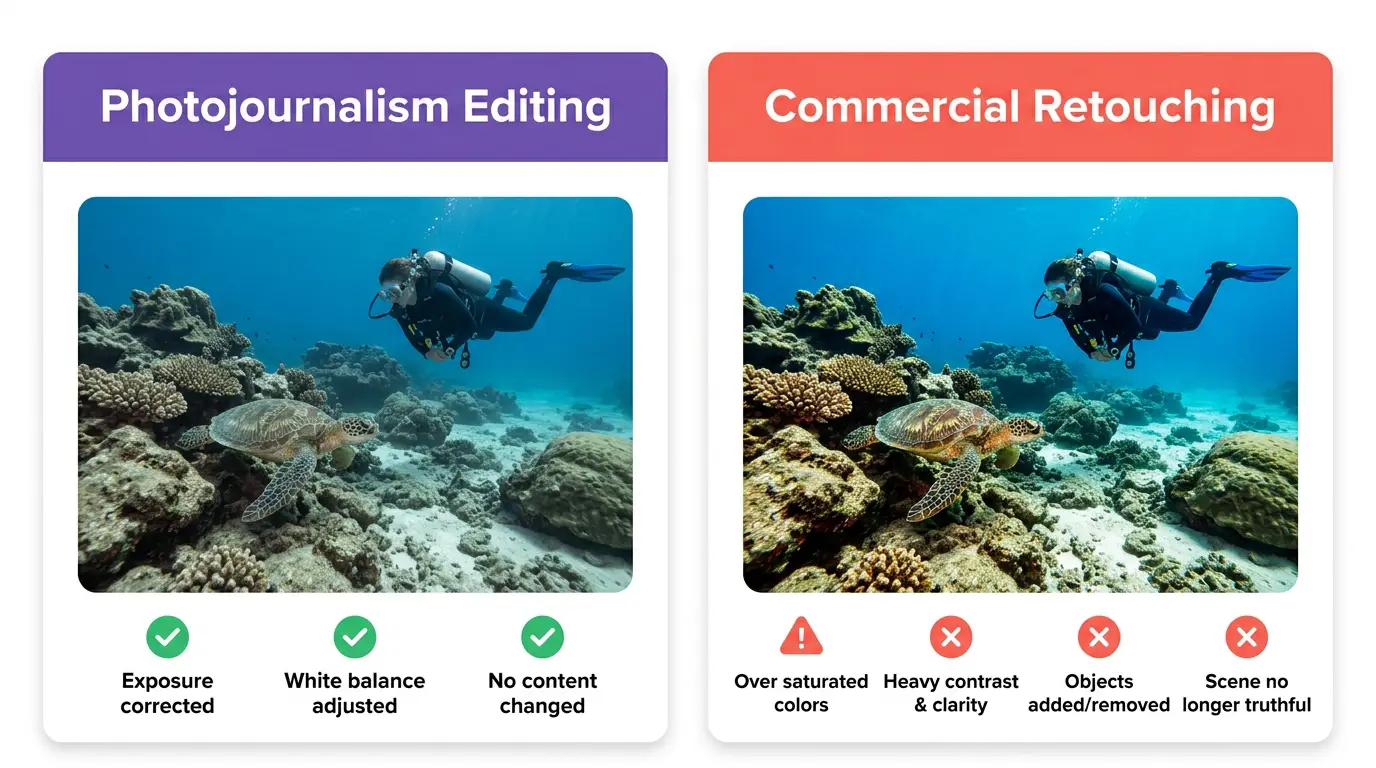
It can help to see the two approaches laid out side by side.
| Photojournalism Editing | Commercial Retouching |
| Focuses on accuracy | Focuses on presentation |
| Preserves the event | Enhances visual appearance |
| Limited technical corrections | More extensive editing |
| Context is important | Distraction removal is common |
| Avoids changing meaning | Enhancement can be part of the project |
Neither approach is inherently better than the other. They simply serve different purposes. Editing standards depend heavily on the purpose of the photograph. A product photo exists to sell something and is expected to be enhanced. A news photograph exists to document something and is expected to remain accurate. Confusion or overlap between these two standards is where most photo-editing controversies in journalism actually come from.
Why Ethical Photo Editing Matters in Modern Photography
Editing technology has changed enormously over the past decade, and that shift makes this entire conversation more relevant, not less.
Modern tools include advanced Photoshop features, AI-assisted editing, faster and more convincing object removal, automated retouching presets, and other capabilities that make manipulation far easier than it used to be. A change that once required hours of manual retouching work can now be done in seconds with a single click.
This is exactly why editorial judgment matters more today than it did in the past. The technical barrier to manipulating a photograph convincingly has essentially disappeared. What remains is human judgment. The decision by a photographer or editor about whether a particular adjustment belongs in a documentary image at all.
The core point is worth repeating clearly: better editing technology makes responsible editing decisions more important, not less. Powerful tools don’t lower the ethical bar for photojournalism; they raise the stakes for getting that judgment right, because the potential for undetectable manipulation has never been higher.
Frequently Asked Questions About Photojournalism Editing
What is photojournalism editing?
Photojournalism editing is the process of technically preparing news, documentary, and editorial photographs for publication. Correcting things like exposure, color, and composition. Without changing the factual content of the scene.
Is cropping allowed in photojournalism?
Yes, cropping is generally acceptable when it improves composition or removes unnecessary space without cutting out meaningful context. It becomes problematic when it removes people, objects, or details that change how a viewer understands the scene.
Can you retouch a person in a documentary photo?
Appearance-focused retouching, such as skin smoothing or reshaping features, is generally discouraged in documentary photography. This kind of retouching can compromise the honest representation of the subject and is treated very differently from basic technical correction.
Is black-and-white conversion acceptable in photojournalism?
It depends on editorial standards and context. Many publications accept black-and-white conversion as a stylistic choice. But it does remove color information that may carry meaning, so it’s usually considered on a case-by-case basis.
What is the difference between photojournalism editing and retouching?
Photojournalism editing focuses on technical correction exposure, color, cropping to preserve accuracy. Retouching focuses on appearance-based enhancement designed to improve how a subject or scene looks, which is generally more appropriate for commercial work than documentary photography.
Keep the Image Honest
Photojournalism editing isn’t about avoiding editing completely. Every professional photograph benefits from some level of technical correction, and pretending otherwise would be unrealistic. Adjusting exposure, correcting color casts, straightening a horizon, or applying a light crop can all improve clarity without compromising the truth of the image.
What matters is where that editing stops. Meaningful elements and context need to remain intact. People, objects, and details that were part of the original scene should stay part of the published photograph. Above all, editing should never change the story represented by the photograph. Because the moment it does, the image stops functioning as documentation and starts functioning as something else entirely.
Responsible editing is ultimately what helps preserve trust in documentary photography. In a media environment where manipulation has never been easier, knowing exactly where to draw that line is one of the most valuable skills a photojournalist or photo editor can have.
Need professional photo editing for commercial, product, or other non-editorial photography? Explore GRASIGNER‘s professional image editing services.