Ghost Mannequin vs Flat Lay Photography is an important choice for clothing brands selling online. Since customers cannot touch the fabric or try on the clothes, your product photos need to show the product clearly and build confidence. Two popular options in fashion ecommerce are ghost mannequin photography and flat lay photography. Both can create strong product images, but they serve different purposes.
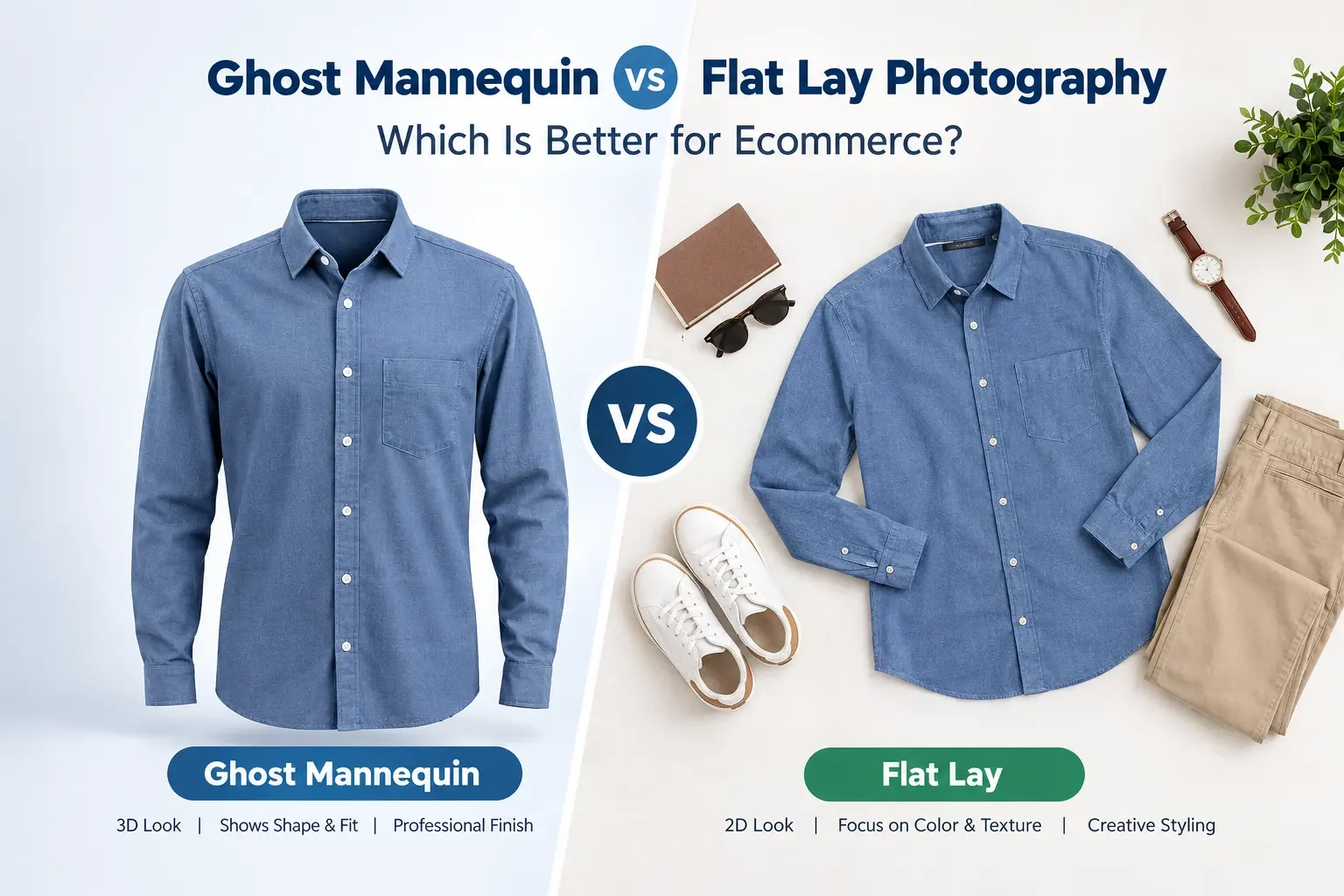
Ghost mannequin photography gives clothing a realistic three-dimensional look by removing the mannequin during editing. It helps customers see the garment’s shape, structure, and overall fit without showing a person or mannequin. Flat lay photography takes a simpler approach. The garment is placed flat and photographed from above, putting more focus on its color, pattern, texture, and styling.
So, which one should you choose? There is no single answer. The right option depends on the type of clothing, your budget, and where you plan to use the images, such as product pages, marketplace listings, social media, or lookbooks. In this guide, we’ll compare both techniques to help you choose the right photography style for each product in your catalog.
Ghost Mannequin vs Flat Lay Photography: At a Glance
Here’s the short version before we get into specifics.
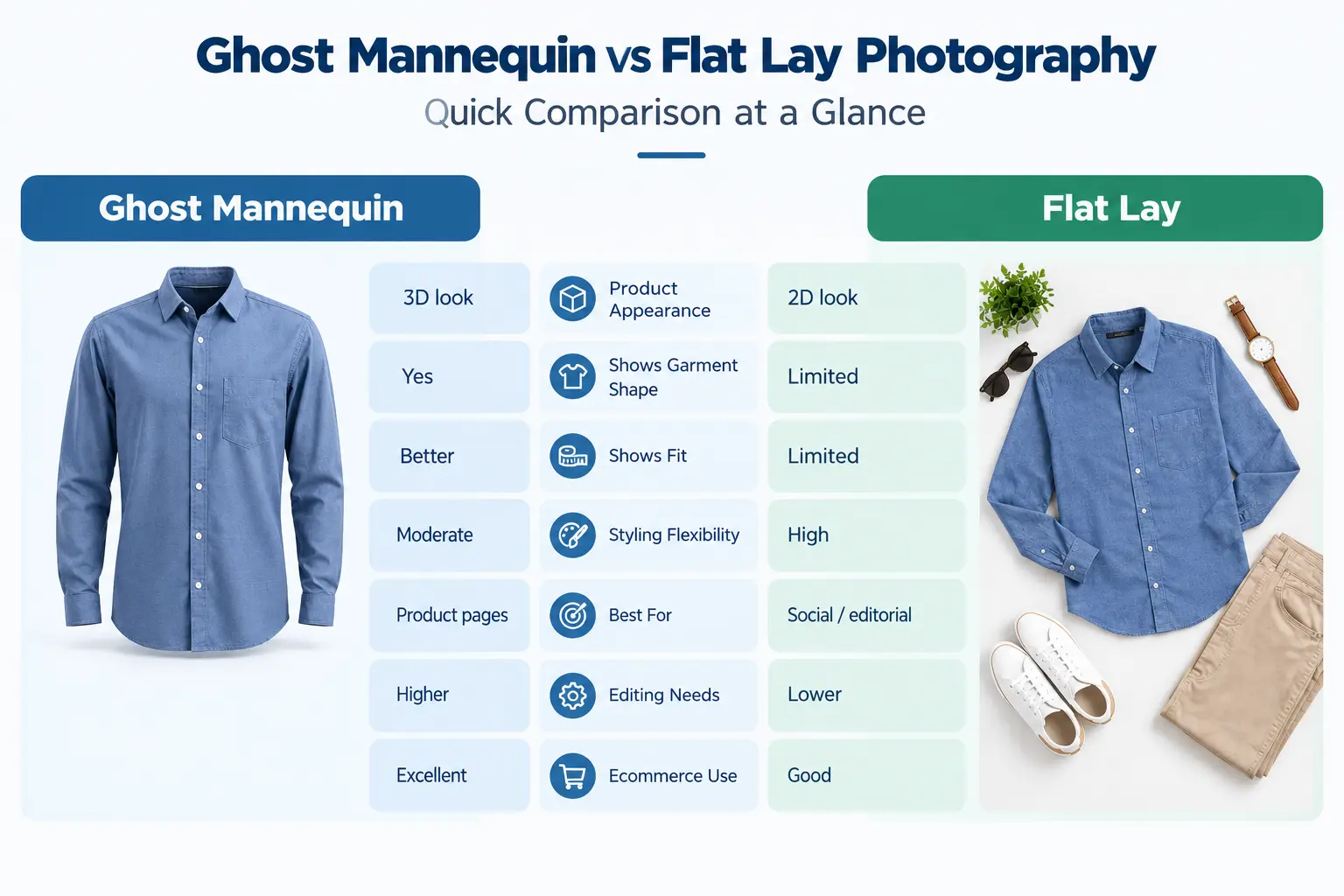
| Feature | Ghost Mannequin | Flat Lay |
| Product appearance | 3D look | 2D look |
| Shows garment shape | Yes | Limited |
| Shows fit | Better | Limited |
| Styling flexibility | Moderate | High |
| Best for | Product pages | Social/editorial |
| Editing needs | Higher | Lower |
| Ecommerce use | Excellent | Good |
Keep this table in the back of your mind as you read. It will make more sense once you see why each method behaves the way it does.
What Is Ghost Mannequin Photography?
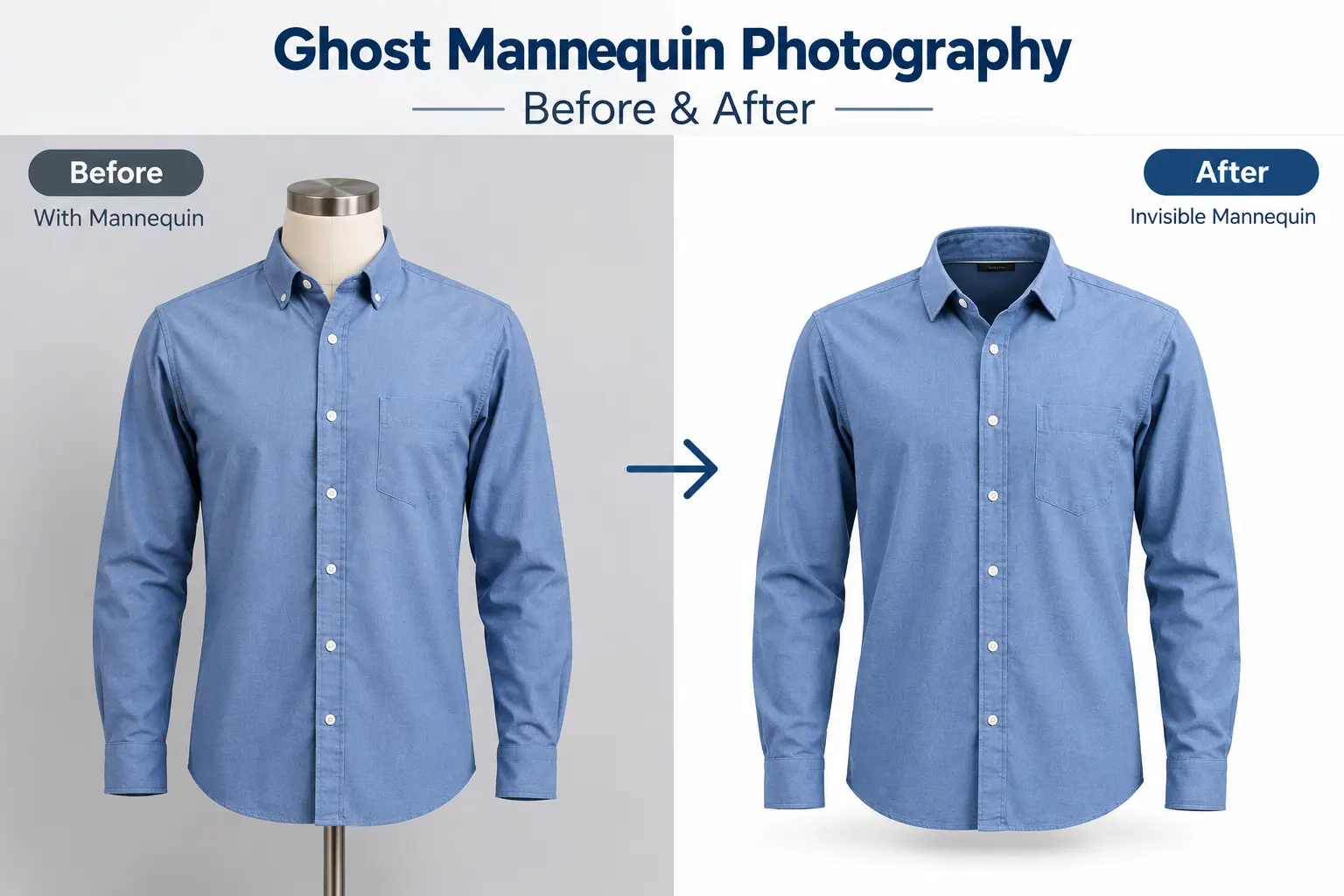
Ghost mannequin photography (sometimes called invisible mannequin photography) is a way of shooting clothing so it looks like it’s floating on an invisible body. No model, no visible mannequin, just the garment, holding its natural shape and volume.
To pull this off, a photographer shoots the garment on a real mannequin first. That mannequin then gets removed in editing, leaving behind a clean shot where the clothing appears to be worn by, well, nobody in particular. It sounds like a small trick, but the effect matters a lot commercially. It’s the closest thing to seeing a garment “on” without paying for a model shoot.
Where this method really earns its keep is in the details a flat image can’t show: how a collar sits, how sleeves fall, the shape of a neckline, the line of the shoulders. Shoppers get a much better read on fit and construction before they ever click “add to cart.”
How Ghost Mannequin Photography Works
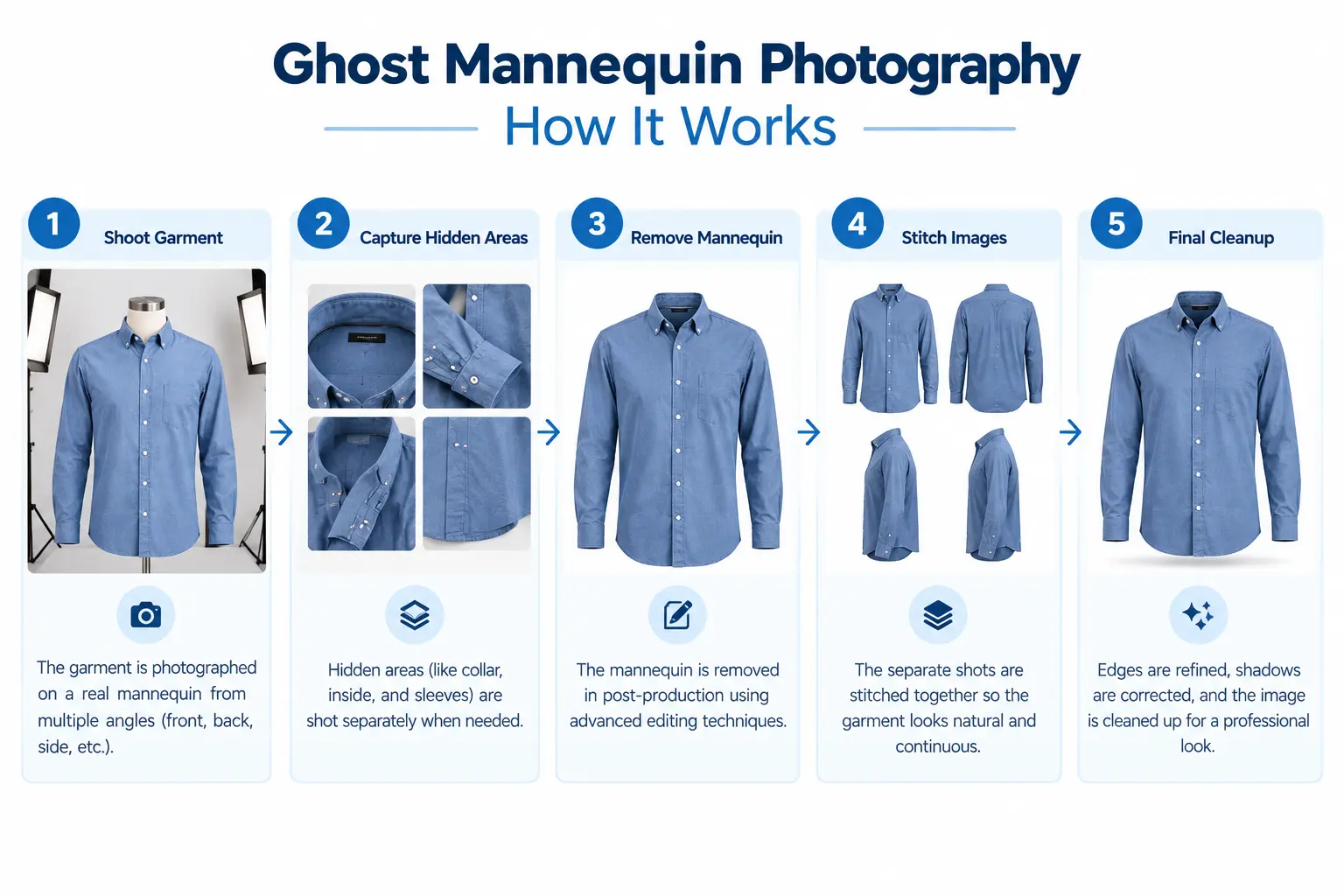
The final image looks effortless, but there’s a fair amount happening behind the scenes:
- The garment is photographed on a mannequin — front, back, and sides, depending on the piece.
- Hidden areas get shot separately when needed. A jacket’s inside collar, for instance, is usually covered by the mannequin, so photographers often grab that shot on its own.
- The mannequin is removed in post-production. This is the trickiest step and takes a trained editor to do cleanly.
- The separate shots are stitched together so the garment reads as one continuous, natural piece.
- The image gets cleaned up — shadows corrected, edges refined, texture and stitching preserved.
This is also why ghost mannequin photo editing has a real skill ceiling. Done badly, you end up with a visible seam at the neck, a weirdly flat shoulder, or a garment that just looks “off” in a way shoppers notice even if they can’t say why. Done well, nobody thinks about the editing at all. They just see a clean, professional product shot.
What Is Flat Lay Photography?

Flat lay photography skips the whole shape question. The garment goes flat on a table, backdrop, or floor, and the camera shoots straight down at it. No mannequin, no model, just the clothing itself, viewed from above.
Because there’s no attempt to recreate a body shape, flat lay photography puts the attention somewhere else: color accuracy, fabric texture, pattern, and styling. It’s common to see props, accessories, or other garments arranged around the main piece to build a more editorial, put-together look.
The appeal is obvious once you’ve tried both: flat lay setups are quicker, cheaper, and far more forgiving creatively. You can rearrange a flat lay in seconds. Rearranging a ghost mannequin shot means redoing the whole shoot.
When Does Flat Lay Clothing Photography Work Best?
Flat lay tends to shine when a garment’s shape isn’t the main selling point. Or when the photo’s job is to set a mood rather than answer “how will this fit me?” Think:
- T-shirts
- Casual, everyday clothing
- Baby clothing (mannequins for infant sizes are a hassle anyway)
- Activewear, often styled with gear like sneakers or a water bottle
- Bags, belts, and other accessories
- Scarves and hats
- Social media posts
- Lookbooks and editorial spreads
If your brand leans heavily on Instagram or Pinterest-style content, flat lay is usually the more practical route.
Ghost Mannequin vs Flat Lay Photography: Key Differences
Garment shape and fit
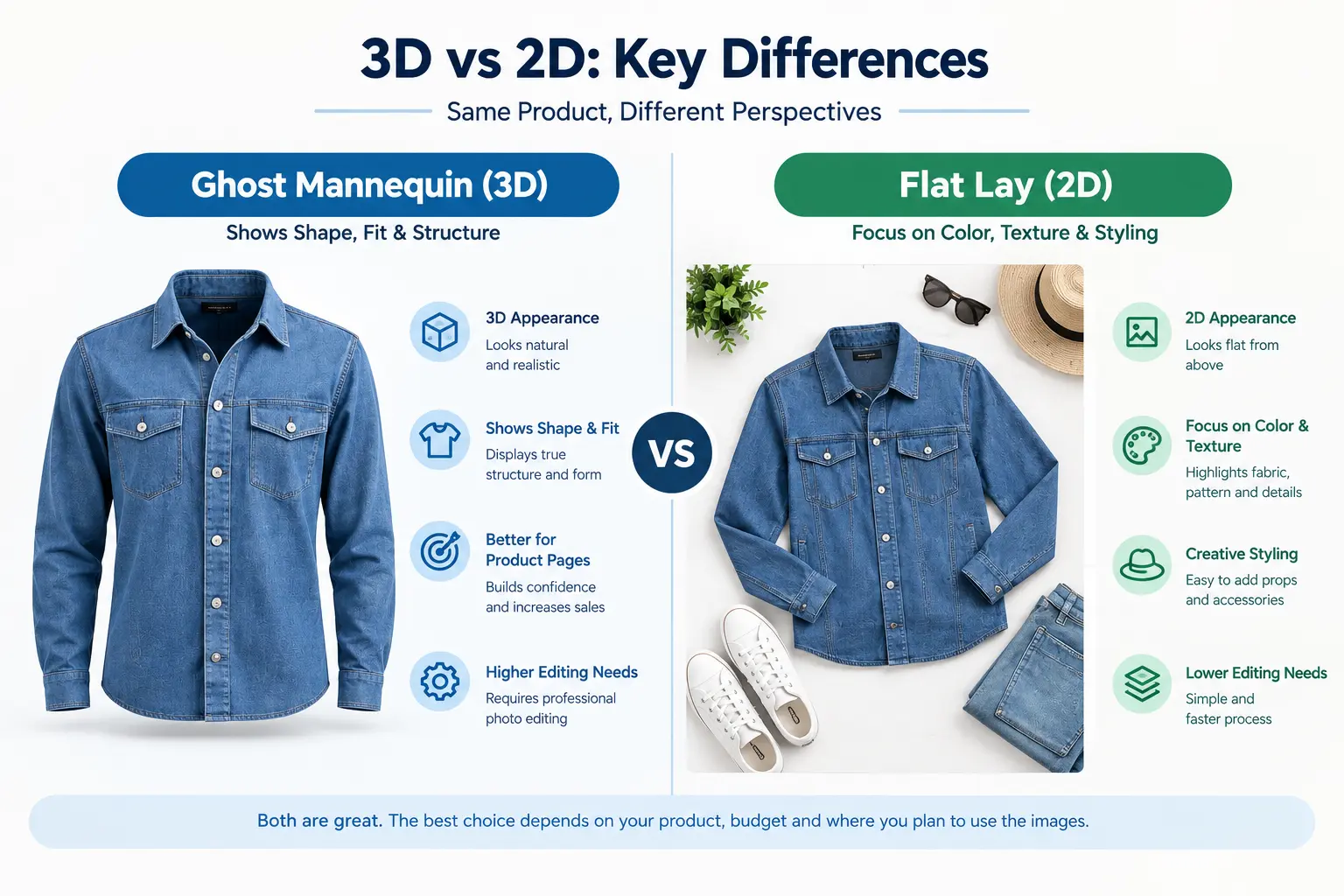
This is really the whole ballgame. Ghost mannequin photography keeps a garment’s natural volume, so customers get a realistic sense of drape and fit. Flat lay flattens everything out, which can make it genuinely harder to judge fit. Especially with something like a fitted blazer or a structured dress.
3D vs 2D
Ghost mannequin shots have depth to them. Shoulders look like shoulders. Sleeves hang the way they would on a person. Flat lay images, by nature, don’t, and that’s not a knock against them, since plenty of shoppers actually like the clean, graphic feel of a well-shot flat lay. It’s just a different visual language.
Construction details
Ghost mannequin photography is much better at showing the things that actually matter for judging quality: collar shape, sleeve length, neckline, shoulder seams, overall silhouette, even inner linings when relevant. Flat lay can still capture texture and pattern beautifully, but it struggles with anything three-dimensional.
Styling flexibility
Flat lay wins here, no contest. Without a mannequin to manage, you can layer pieces, add props, and build a composition in ways that would be awkward or impossible with ghost mannequin work.
Editing and production
Ghost mannequin shoots typically take longer and cost more, thanks to the multiple angles and the editing work involved in removing the mannequin cleanly. Flat lay still benefits from good retouching, but it’s a lighter lift overall. Which matters if you’re photographing hundreds of SKUs a month.
Which Sells Clothing Better for Ecommerce?
Honestly? It depends on what you’re selling. Neither method wins across the board.
When it comes to selling clothing online, ghost mannequin photography often works better for product pages because it clearly shows the garment’s shape, structure, and fit. Flat lay photography can be a better choice for casual clothing, accessories, and creative content where color, texture, and styling matter more.
So, which one sells clothing better? There is no single answer. Ghost mannequin photography is ideal for shirts, blazers, jackets, dresses, and other structured garments, while flat lay photography works well for T-shirts, baby clothing, activewear, and accessories. Many ecommerce brands use both styles to present their products effectively across product pages, marketplaces, social media, and lookbooks.
Why ghost mannequin photography works well for ecommerce
Ghost mannequin photography for ecommerce has basically become the default for a reason. It shows structure clearly, looks polished on a product page, and helps shoppers judge fit without needing a model. That professionalism matters even more on marketplaces like Amazon or Etsy, where a consistent, clean catalog signals a legitimate, trustworthy seller.
It’s particularly strong for structured clothing: shirts, blazers, jackets, dresses, anything where the shape is part of the sales pitch.
Why flat lay photography can work for ecommerce
Flat lay clothing photography still earns its place, especially for simpler or more casual pieces where fit isn’t the deciding factor. It’s also a natural fit for accessories, which often photograph better from above than they would on a mannequin. And beyond individual product pages, flat lay does a lot of heavy lifting in lifestyle content banners, email campaigns, blog posts, social feeds. Where a relaxed, styled shot tends to outperform a strictly commercial one.
When to Choose Ghost Mannequin Photography
Reach for ghost mannequin photography when you’re shooting:
- Shirts and blouses
- Jackets and coats
- Dresses
- Blazers
- Knitwear
- Hoodies
- Sportswear
- Structured fashion pieces
- Premium collections
The common thread across all of these is that shape is part of the buying decision. Someone shopping for a blazer wants to know how it’ll sit on their shoulders before they buy it. A flat photo just can’t answer that. And for higher-end collections, the extra polish of a well-edited ghost mannequin shot reinforces the sense that the product is worth the price.
When Flat Lay Photography Works Best
Flip side — flat lay tends to be the better call for:
- T-shirts
- Baby clothing
- Activewear
- Accessories
- Scarves
- Hats
- Jewelry
- Social campaigns
- Lookbooks
- Editorial content
Here, either the garment’s shape is simple enough that a 3D shot doesn’t add much, or the photo’s real job is telling a story rather than proving fit. Flat lay clothing photography is also just faster to produce at volume, which matters a lot if you’re turning over inventory quickly.
Ghost Mannequin vs Flat Lay Photography for Different Clothing Types
| Clothing Type | Recommended Style |
| T-shirts | Flat Lay / Ghost Mannequin |
| Shirts | Ghost Mannequin |
| Blazers | Ghost Mannequin |
| Dresses | Ghost Mannequin |
| Hoodies | Ghost Mannequin |
| Baby Clothes | Flat Lay |
| Accessories | Flat Lay |
| Activewear | Both |
| Jewelry | Flat Lay |
Ghost mannequin for structured clothing
For anything with real structure shirts, blazers, dresses, hoodies, ghost mannequin and invisible mannequin photography give shoppers the clearest possible read on what they’re actually buying. That clarity tends to show up later as fewer returns, which is arguably the underrated benefit of good clothing product photography.
Flat lay for casual and lifestyle products
For simpler, more relaxed pieces, flat lay photography (and flat lay clothing photography more broadly) offers a quicker, more creative way to present the product. It’s especially effective for fashion product photography aimed at social platforms, where a nicely styled flat lay will often out-perform a plain product shot on engagement.
Ghost Mannequin Editing: Why Professional Editing Matters
Here’s the part a lot of brands underestimate: the ghost mannequin effect is only as good as the editing behind it. This is where a lot of DIY attempts fall apart, and it’s a big reason so many ecommerce brands hand this work off to a dedicated editing team instead of doing it in-house.
Solid ghost mannequin editing usually covers:
- Removing the mannequin cleanly
- Blending the neck joint so it looks continuous
- Fixing sleeves and interior angles that look awkward straight out of camera
- Cleaning up wrinkles left by the mannequin
- Preserving the garment’s true shape
- Keeping backgrounds consistent across the whole catalog
- Matching lighting and color from image to image
What makes a professional ghost mannequin effect?
The best ghost mannequin work is basically invisible, a shopper shouldn’t be able to tell the image was edited at all. That means keeping the garment’s shape, texture, stitching, edges, color, and proportions all true to life. Miss any one of those and the image starts to look slightly artificial, which chips away at the trust you’re trying to build. This is exactly why so many brands and photography agencies outsource ghost mannequin photo editing rather than risk an inconsistent, DIY-looking catalog.
Can You Use Both Ghost Mannequin and Flat Lay Photography?
Yes — and honestly, this is what most mature ecommerce brands end up doing. Instead of picking a side in the ghost mannequin vs flat lay debate, they use each method where it’s strongest:
- Product pages: Ghost mannequin
- Category pages: Ghost mannequin
- Marketplaces: Ghost mannequin
- Social media: Flat lay
- Lookbooks: Flat lay
- Creative campaigns: Flat lay
- Hero and lifestyle content: Model photography
Running both gives you the accuracy and professionalism of ghost mannequin shots where purchase decisions actually happen, plus the creative flexibility of flat lay where brand personality and storytelling carry more weight.
Ghost Mannequin vs Flat Lay Photography: Which One Should You Choose?
If you’re still on the fence, here’s a straightforward way to decide.
Go with ghost mannequin if:
- You sell structured clothing
- You want that 3D, worn-look presentation
- Your product pages need to look polished and consistent
- Shape and construction genuinely matter to buyers
Go with flat lay if:
- You sell simpler, casual clothing
- You want more creative room to style shots
- You’re producing content for social media regularly
- You need something quick and low-cost
Use both if:
- Your catalog spans a wide range of product types
- You need content for both ecommerce and social
- Different channels call for different visual styles
Most brands land here eventually, once they’ve tested both approaches on real products.
Ghost Mannequin vs Flat Lay Photography: Pros and Cons
Ghost mannequin pros
- Realistic 3D appearance
- Shows structure clearly
- Professional, catalog-ready look
- Strong for product pages
- Highlights construction well
Ghost mannequin cons
- More editing time and skill required
- Higher production cost
- Overkill for very simple garments
Flat lay pros
- Cheap, simple setup
- Very flexible for styling
- Performs well on social
- Great for accessories
- Easy to make visually interesting
Flat lay cons
- Doesn’t convey shape well
- Hard to judge fit from
- Weaker fit for structured or premium pieces
FAQs About Ghost Mannequin vs Flat Lay Photography
What is the difference between ghost mannequin and flat lay photography?
Ghost mannequin photography creates a 3D “invisible person” effect that shows how a garment holds its shape. Flat lay photography lays the garment flat and shoots it from above, focusing more on color, texture, and styling than structure.
Is ghost mannequin photography better for ecommerce?
For structured garments shirts, jackets, dresses yes, generally. Ghost mannequin photography for ecommerce shows fit and construction more clearly, which helps shoppers buy with confidence and tends to reduce returns.
Is flat lay photography good for clothing?
It’s a good fit for simpler garments like t-shirts, activewear, and accessories, where fit matters less and a more casual or editorial look works fine.
Which photography style shows clothing shape better?
Ghost mannequin, by a wide margin. It preserves the garment’s natural volume, while flat lay flattens it out entirely.
Can I use both ghost mannequin and flat lay photography?
Definitely, plenty of brands use ghost mannequin for product pages and marketplaces, then switch to flat lay for social media, lookbooks, and campaign content.
Does ghost mannequin photography require photo editing?
Yes, always. The mannequin has to be removed and the shot cleaned up afterward. There’s no version of this technique that skips editing.
What type of clothing works best with ghost mannequin photography?
Structured pieces: shirts, blazers, dresses, hoodies, knitwear, and sportswear. Anything where the shape itself is part of the sales pitch.
Final Thought
Ghost mannequin vs flat lay photography isn’t really a question with one universal answer. It’s about matching the technique to the garment and the platform it’s going on.
Ghost mannequin makes sense when shape, fit, and construction matter to the sale of shirts, blazers, dresses, structured outerwear. Flat lay makes more sense for simpler pieces, accessories, and content built around styling rather than strict product accuracy. Most growing brands don’t have to choose one permanently. They use both, deliberately, across different parts of their catalog and marketing.
And since a ghost mannequin shot is only as good as the editing behind it, that editing step is worth taking seriously. This is where GRASIGNER comes in, a ghost mannequin editing service built to give ecommerce brands and photography agencies a clean, natural, consistent invisible mannequin effect across an entire catalog, so every product image builds the same trust your best photo already does.